Dust generated during manufacturing can affect housekeeping, equipment, worker comfort and process conditions. Effective dust control therefore involves more than placing an extraction fan near a machine. Dust should be captured, transported and separated through a system designed around its characteristics.
When shortlisting a Dust Collector Manufacturer Bangalore, industrial buyers should evaluate both the collection equipment and the engineering behind the complete extraction arrangement.
Identify the Dust First
Different processes produce different particulate characteristics.
Before selecting a dust collector, determine:
- Where the dust originates
- Approximate quantity generated
- Particle characteristics
- Number of extraction points
- Operating hours
- Whether the dust has special handling concerns
- Required collection or disposal arrangement
A collector suitable for one manufacturing process should not automatically be assumed suitable for another.
Capture Dust Close to the Source
Effective collection starts before dust reaches the collector.
Hoods or enclosures should intercept particulate matter near the point of generation. If dust spreads throughout the production area first, the ventilation system has to manage a much larger air volume.
Source capture can therefore improve both control effectiveness and system efficiency.
Duct Velocity Is Important
Dust must travel through ducting without settling excessively.
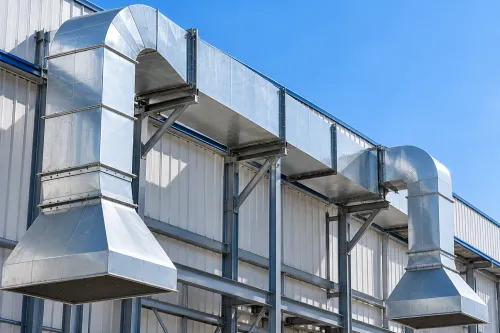
If transport velocity is inadequate for the application, particulate material may accumulate inside ducts. This can increase maintenance requirements and gradually alter system resistance.
Duct dimensions and airflow should therefore be selected with the characteristics of the dust in mind.
Account for Pressure Drop
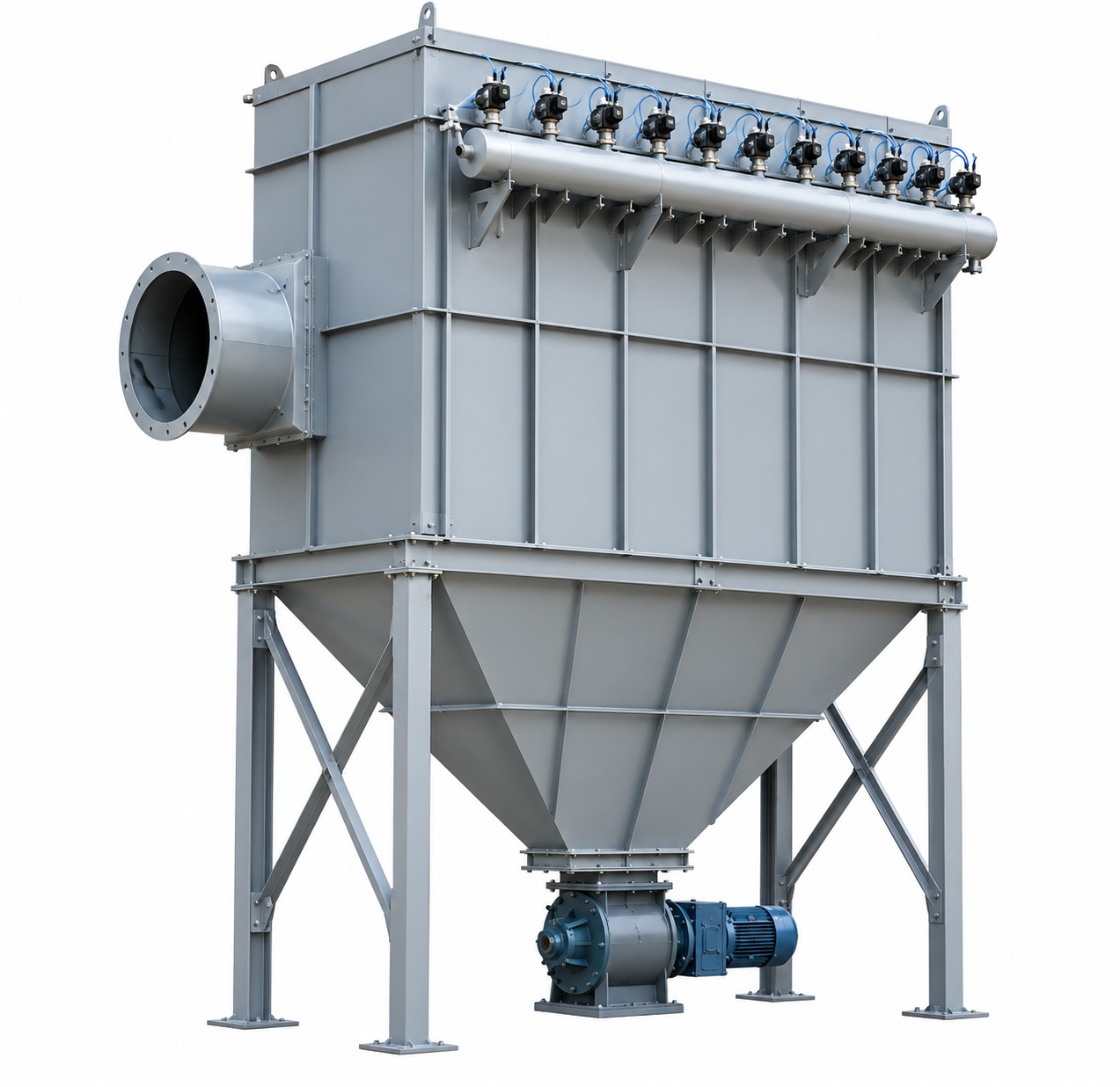
A dust collector creates resistance to airflow.
The blower must overcome the pressure losses across the collection equipment as well as the duct network, hoods, bends and discharge system.
This is why blower and collector specifications should be coordinated rather than purchased independently.
Maintenance Access Should Be Planned
Collection equipment needs inspection and maintenance over its working life.
Buyers should check accessibility for cleaning, dust removal and servicing. Installing equipment in an area with inadequate working clearance can make routine maintenance unnecessarily difficult.
Factories in Bangalore should consider these requirements during layout planning rather than after installation.
Questions to Ask a Manufacturer
Before finalizing a supplier, discuss:
- How the required airflow will be established
- How duct losses are considered
- What information is needed about the dust
- How collected material will be handled
- What maintenance access is required
- Whether ducting and blower requirements can be coordinated
Sri Krishna Fibre Industries provides pollution-control equipment, industrial ventilation systems and fabrication for industrial projects, allowing dust extraction requirements to be reviewed from source capture through final air movement.
The most suitable dust collector is not necessarily the largest unit or the one with the highest quoted capacity. It is the system configured for the actual process, airflow, particulate characteristics and site conditions. A technically complete assessment before ordering gives manufacturing plants a stronger basis for long-term dust-control performance.
Keywords