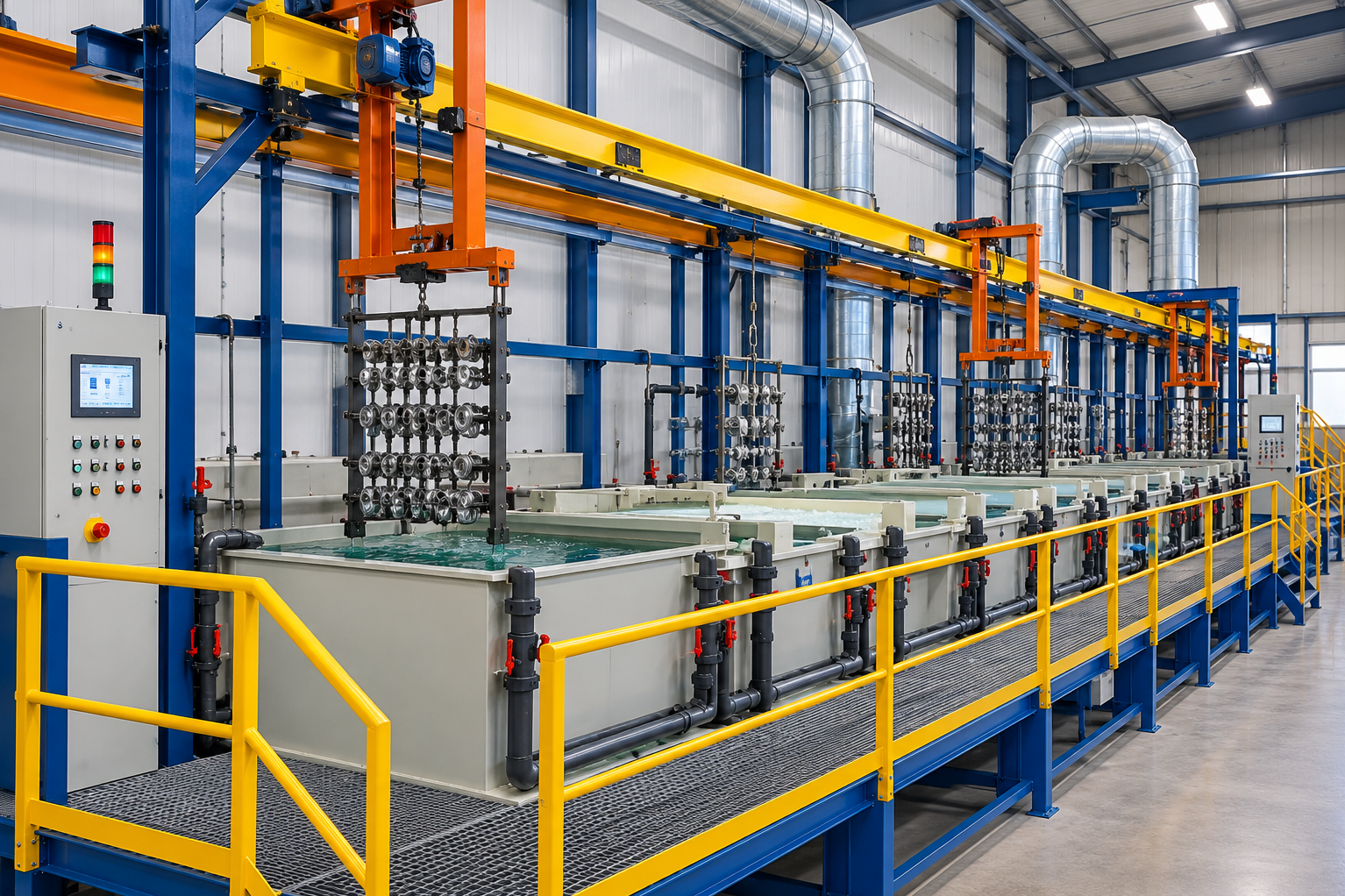
An electroplating line brings together multiple tanks, chemical processes, material movement, ventilation and utility requirements. Because these elements are interconnected, poor planning in one area can create bottlenecks elsewhere.
Companies evaluating a Plating Line Manufacturer Bangalore should therefore approach procurement as an integrated engineering project rather than simply ordering a series of tanks.
Begin with the Plating Process
The line layout should reflect the actual process sequence.
Depending on the application, stages may involve cleaning, rinsing, surface preparation, plating and other treatment steps. Each tank should be positioned according to the intended workflow.
A clear process sequence helps determine:
- Number of tanks
- Tank dimensions
- Material of construction
- Utility connections
- Material movement
- Ventilation points
- Working clearances
Consider Production Capacity
The required throughput influences both equipment dimensions and line configuration.
Buyers should establish component size, batch quantity, production frequency and expected future demand. Designing only for current output without considering realistic expansion can create limitations later.
At the same time, unnecessary oversizing can increase initial investment and occupy valuable factory space.
Material Compatibility Is Critical
Plating processes involve chemical solutions that can be corrosive.
Tank and equipment materials should therefore be selected according to chemical compatibility, temperature and mechanical requirements.
PP, FRP and other suitable materials can be used for appropriate industrial applications, but specifications should always reflect the actual process chemistry.
Do Not Ignore Fume Extraction
Chemical tanks can release fumes during operation.
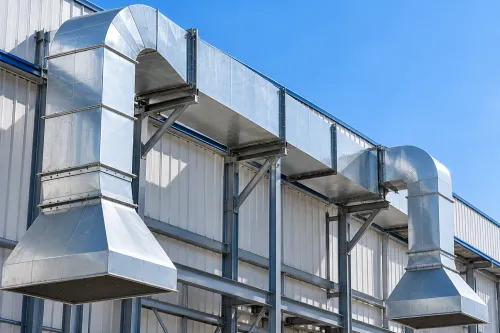
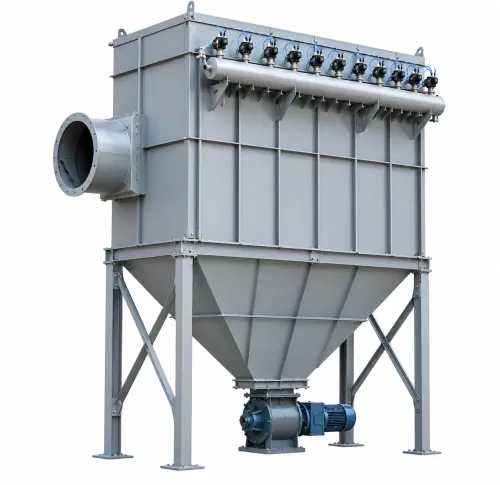
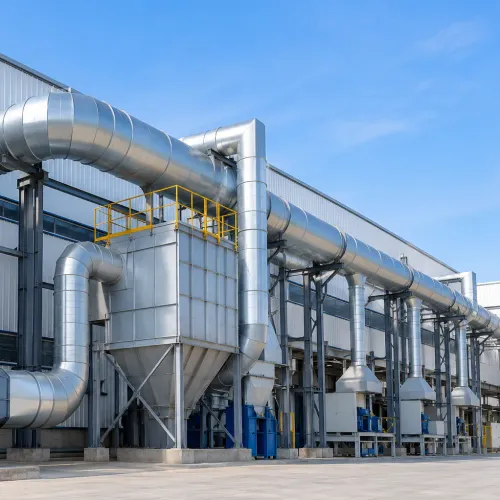
Effective source extraction helps capture these contaminants near the tank before they spread into the surrounding production area. The ventilation system may include hoods, ducting, a scrubber and centrifugal blower.
This pollution-control arrangement should be considered during line design rather than added as an afterthought.
Plan Operator Access and Maintenance
A productive plating line should also be serviceable.
Adequate space may be required for operators, tank inspection, piping, pumps and maintenance activities. Walkways and equipment access should be considered during layout development.
For factories in Bangalore where existing floor space may already be constrained, careful planning can help use the available area more effectively.
Evaluate the Manufacturer’s Engineering Scope
A BOFU-stage buyer should look beyond fabrication price.
Useful questions include:
- Can the manufacturer work from the process sequence?
- Are tank materials selected according to service conditions?
- Can ventilation and fume extraction be integrated?
- Can scrubbers, blowers and ducting be coordinated?
- Is custom fabrication available for site constraints?
- Are maintenance requirements considered in the layout?
Sri Krishna Fibre Industries works across plating lines, pollution-control systems, industrial ventilation and fabrication for manufacturing applications in Bangalore. This can be valuable where the plating process and exhaust-control system need coordinated planning.
Prepare Before Requesting a Final Proposal
A useful project brief should contain the plating process, chemicals involved, component dimensions, target production capacity, available floor area, preferred material movement method, utility requirements and ventilation needs.
Providing this information helps convert a general enquiry into a technically meaningful project discussion.
For electroplating units and engineering companies across Bangalore and Karnataka, successful plating-line planning depends on seeing the installation as one connected production system. Tank configuration, workflow, materials, ventilation, pollution control and maintenance access should all support the same operational objective.
Keywords