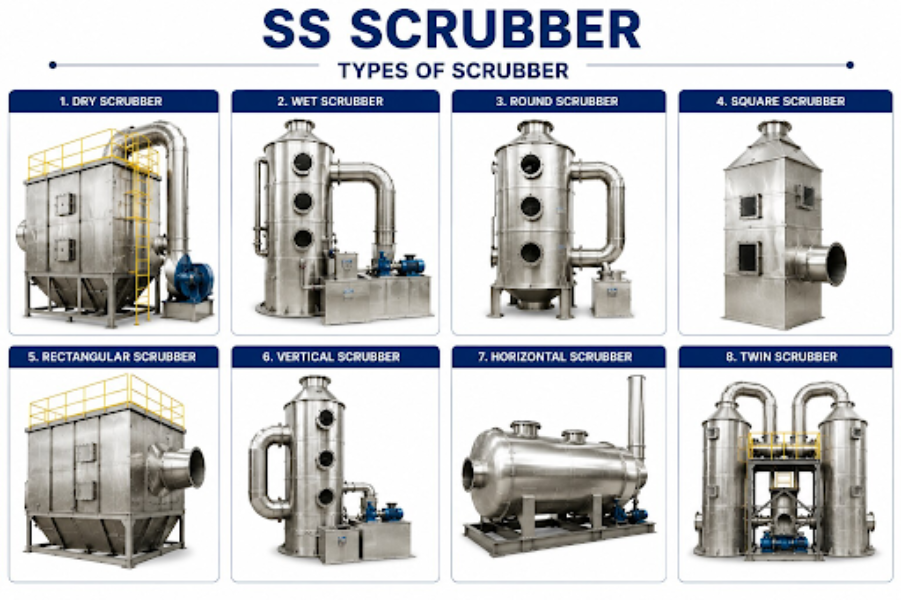
Chemical fumes and gaseous contaminants require a different control strategy from ordinary ventilation. Simply moving contaminated air from one part of a factory to another does not treat the pollutant. This is where industrial scrubbers become important.
Companies researching a Scrubber Manufacturer Bangalore should first understand what a scrubber is expected to accomplish and why scrubber selection depends heavily on the industrial process.
How Does a Scrubber Work?
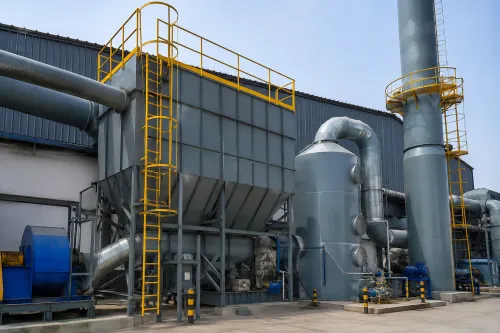
A scrubber brings contaminated exhaust air into contact with a suitable scrubbing medium. The interaction helps capture, absorb or neutralize targeted contaminants before the treated air moves toward the discharge stage.
While designs vary, a scrubber system commonly involves:
- Contaminated air entering the unit
- Air interacting with scrubbing liquid or media
- Target contaminants being transferred or treated
- Moisture droplets being separated where required
- Treated air leaving the equipment
The effectiveness of this process depends on correct engineering rather than the physical size of the scrubber alone.
Where Are Scrubbers Commonly Required?
Industrial scrubbers may be relevant to operations involving:
- Chemical processing
- Electroplating
- Pickling
- Surface treatment
- Pharmaceutical manufacturing
- Acid handling
- Process tanks
- Metal finishing
- Other fume-generating activities
Bangalore has a broad manufacturing base ranging from engineering and pharmaceutical operations to surface-treatment facilities. Each process can create a different exhaust composition, which means scrubber specifications should be application-specific.
What Determines Scrubber Performance?
Several factors influence how effectively a scrubber performs.
Pollutant Characteristics
The first requirement is identifying what the system needs to control. Different gases, vapours and chemical fumes behave differently.
Air Volume
The scrubber should be designed for the amount of contaminated air entering the system. Incorrect airflow assumptions can affect contact efficiency and pressure conditions.
Contact Between Air and Liquid
Effective interaction between the exhaust stream and scrubbing medium is central to wet scrubbing. Internal arrangements should support appropriate contact for the intended application.
Pressure Drop
Every component introduces resistance to airflow. The blower needs to account for pressure losses through ducting, scrubber internals and associated equipment.
Construction Material
Chemical compatibility is particularly important. Corrosive fumes can rapidly damage unsuitable materials, increasing maintenance requirements and shortening equipment life.
Why the Scrubber Cannot Be Selected Alone
A scrubber is usually part of a larger pollution-control network.
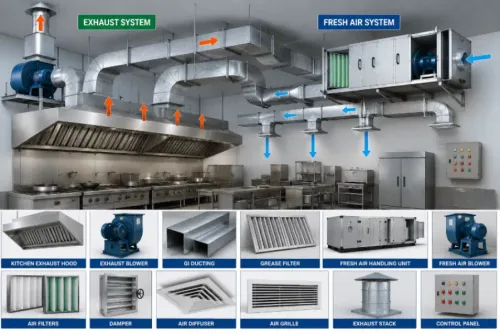
The hood needs to capture fumes effectively. Ducting must carry them without excessive losses. The blower must generate adequate suction. The scrubber must treat the contaminants, while the discharge arrangement should support stable operation.
Looking at only one component can therefore create performance gaps.
Sri Krishna Fibre Industries manufactures pollution-control and ventilation equipment for industrial applications in Bangalore, with fabrication requirements considered according to process and project needs.
What Plant Teams Should Establish First
Before discussing scrubber dimensions or configurations, project teams should gather basic process information. Useful inputs include the contaminant involved, number of exhaust points, approximate air volume, operating hours, available installation space and characteristics of the exhaust stream.
A properly selected scrubber is not simply an exhaust accessory. It forms part of an engineered pollution-control process designed around the actual conditions inside the industrial plant.
Keywords