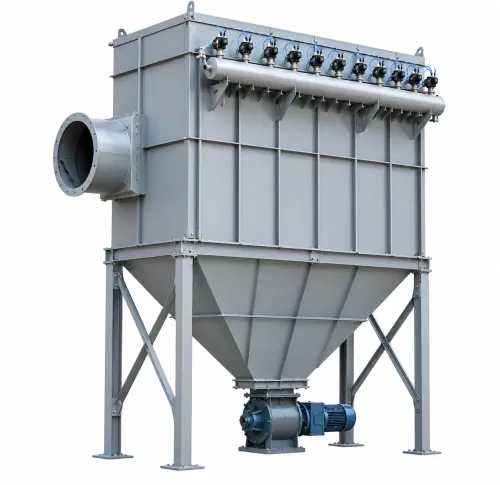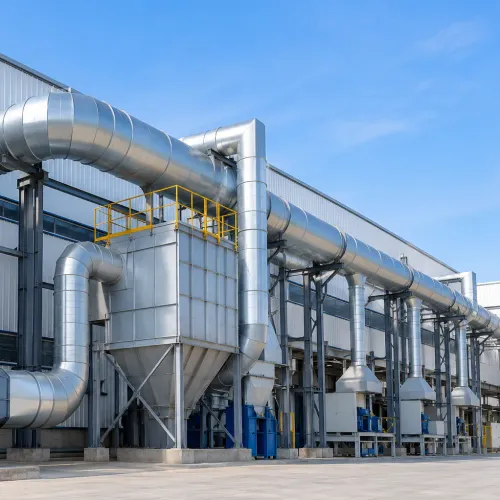
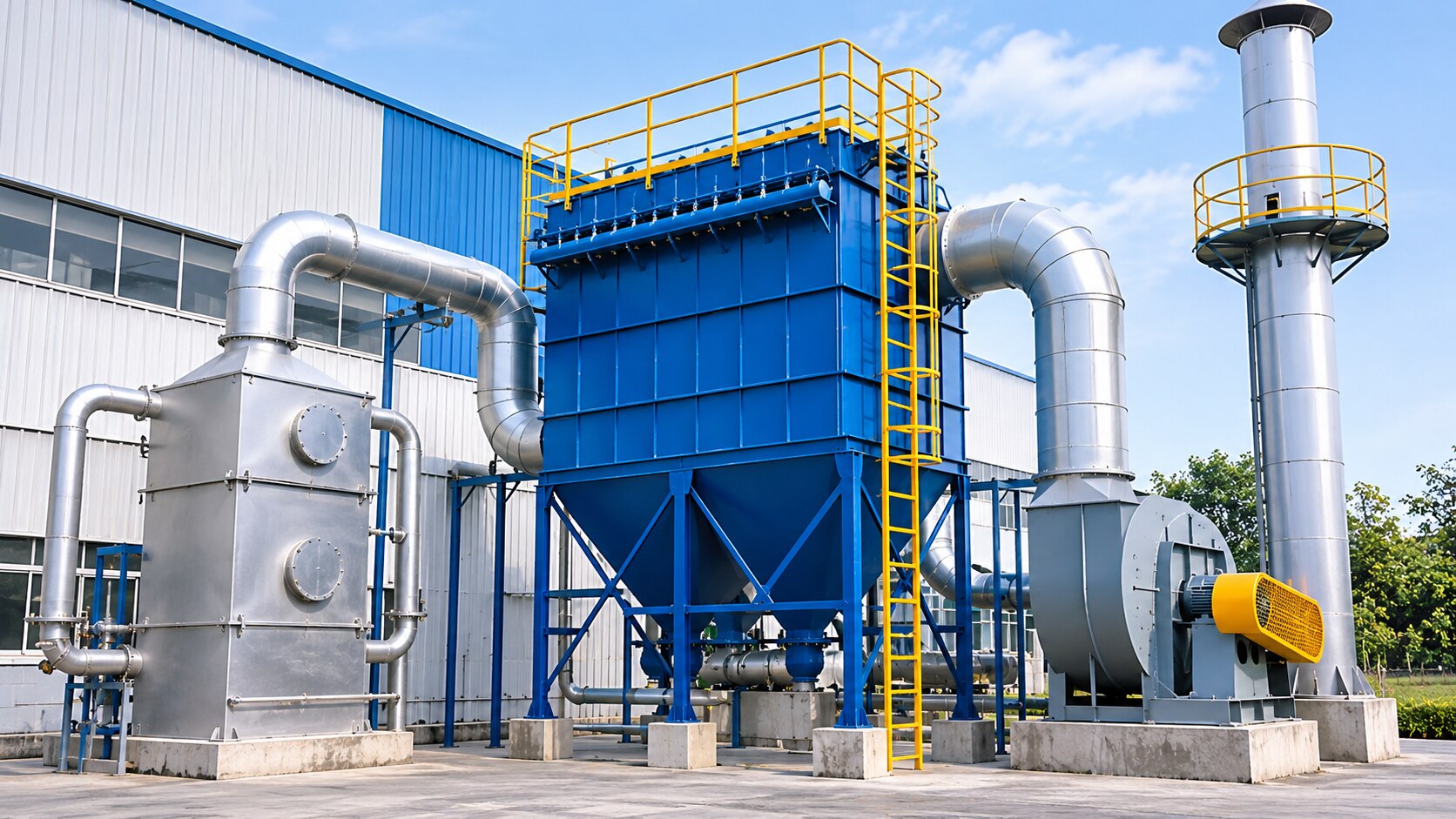
A credible manufacturer must size, build, install, and prove a complete system under your actual process conditions—not simply quote a dust collector, scrubber, blower, or material grade. By the end, you will have a practical way to prepare the design basis, compare technical proposals, test performance, and select a supplier that can support the equipment throughout its operating life.
Key takeaways
- Provide flow rate, temperature, contaminants, moisture, and target emission limits.
- Select materials after checking corrosion, abrasion, temperature, and chemical exposure.
- Compare fan sizing, duct losses, access, controls, and energy use—not just the filter.
- Demand measured performance tests, signed guarantees, drawings, manuals, and maintenance plans.
Start with a Complete Design Basis, Not a Requested Equipment Type
A quotation based only on “one scrubber” or “one bag filter” is not an engineered proposal. Give the pollution control system manufacturer a design basis that describes the process, the emission source, and the conditions the equipment must handle.
1. Identify each contaminant, including particle-size distribution, VOC composition, corrosiveness, inlet concentration, variability, and required outlet concentration. State the actual flow and standard flow, with the m³/h and CFM flow rate, gas temperature, moisture content, oxygen reference, static pressure in Pa or mmWC, operating hours, startup and shutdown conditions, and required operating range.
2. Describe the process connection: hood or duct locations, available space, elevation, utility availability, discharge-point limits, and whether the system must handle continuous, batch, or intermittent loading. Confusing actual flow with standard flow can materially undersize a fan and collector.
3. For a wet scrubber, request liquid-flow and blowdown calculations, reagent consumption, expected wastewater or sludge composition, corrosion assumptions, and your disposal or treatment obligations. A scrubber transfers pollutants into liquid or sludge; it does not destroy them.
4. Require the quotation to include a control narrative and cause-and-effect matrix covering fan failure, high differential pressure, high temperature, low liquid or reagent flow, low instrument air, blocked discharge, flame failure, and emergency shutdown.
Also request mass balances, normal and maximum emissions, operating limits, auxiliary-fuel data, design calculations, material traceability, testing records, calibration data, and spare-parts lists.
Match the Control Technology and Materials to the Process
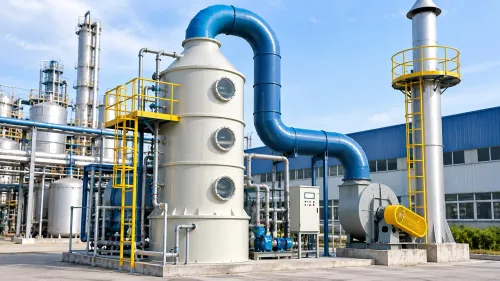
Choose technology by contaminant form and operating envelope, not by equipment label or gas temperature alone. Dry, free-flowing particulate suits a cartridge filter for lower flows or a baghouse for larger dust volumes; pulse-jet filtration supports continuous loading. Sticky, soluble, or hot contaminants point toward a wet scrubber, which transfers pollutants to liquid or sludge.
| Technology | Best fit | Check before selection |
|---|---|---|
| Cartridge filter | Dry, free-flowing particulate | Moisture and sticky dust can blind media |
| Baghouse | High dust loading and broad flow range | Confirm air-to-cloth ratio, media, and temperature |
| Pulse-jet filtration | Continuous dry loading | Control cleaning air and pressure drop |
| Wet scrubber | Soluble gases, sticky, or hot contaminants | Provide wastewater or sludge management |
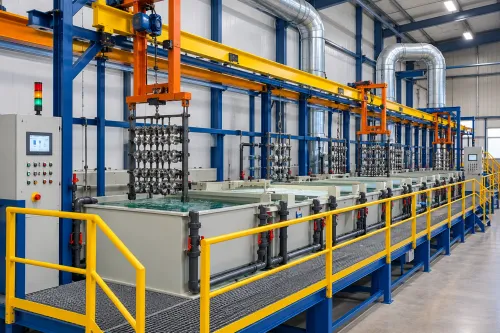
| Dedicated exhaust | Corrosive plating fumes | Isolate capture and corrosion-resistant ductwork |
- Select mild steel (MS) for dry, non-corrosive service; SS 304 for moderate corrosion; SS 316 for chloride exposure; and FRP or PP for acid or alkali service. Include abrasion, UV, temperature, and wet-dry cycling.
- Check condensate and scrubber liquor, not just gas temperature. For reinforced thermoset plastic vessels and tanks, ask whether the design follows ASME RTP-1 and specify materials for every wetted or gas-contacting component.
- Require full-envelope guarantees covering flow, temperature, moisture, dust loading, air-to-cloth ratio, filter media, cleaning mode, pressure drop, or scrubber liquid-to-gas ratio, reagent strength, pressure drop, and liquid chemistry. State blowdown, sludge disposal, test method, averaging period, and correction basis.
Compare the Whole Air-Handling System, Not Isolated Components
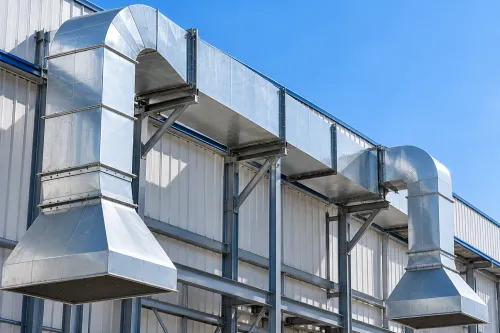
An outlet emission result cannot prove that the system captures dust at the source. Review the hood design, capture velocity, duct velocity, collector pressure drop, blower capacity, and control sequence as one air-handling calculation.
| System element | Compare | Evidence to request |
|---|---|---|
| Hood | Enclosure or open canopy; required capture velocity at the emission point | Hood drawings, face-velocity calculations, access and interference review |
| Duct network | Branch flow balance, duct velocity, bends, and leakage | Static-pressure calculations for each branch and the worst-case operating condition |
| Collector or scrubber | Removal performance across the full load and flow range | Airflow, pressure-drop, temperature, moisture, dust loading, or liquid-to-gas calculations |
| Blower and controls | Fan curve at actual flow and total static pressure | Motor margin, damper positions, variable-frequency-drive sequence, and alarm set points |
Require guarantees across the operating envelope, not at one design point. For a baghouse, record air-to-cloth ratio, inlet temperature, dust loading, moisture, filter media, cleaning mode, and pressure-drop limit. For a scrubber, specify liquid-to-gas ratio, reagent concentration, liquid chemistry, and pressure drop.
Treat pressure drop as an operating cost: fan power rises with gas flow multiplied by pressure drop, divided by fan and motor efficiency. For combustible dust, demand a hazard review covering explosion venting, isolation, spark detection, grounding, conveying, and safe dust discharge; concentrating dust in an efficient collector without these safeguards can increase risk.
Test the Manufacturer’s Guarantees Before You Accept the Installation
Make final payment conditional on a defined acceptance test, not on equipment delivery. The contract must state the guaranteed outlet concentration, removal efficiency, mass emission rate, pressure drop, energy use, and reagent consumption across normal and maximum operating conditions.
| Guarantee | Contract definition | Acceptance condition |
|---|---|---|
| Outlet concentration | Pollutant units, averaging period, detection limit, and oxygen or moisture correction | Result remains below the permit limit |
| Removal efficiency | Inlet and outlet basis, sampling method, and valid inlet concentration range | Required percentage is achieved without hiding an excessive outlet value |
| Mass emission rate | kg/h or g/h, production rate, gas flow, and dilution basis | Calculated emissions stay within the permitted rate |
| Operating performance | Airflow, pressure drop, temperature, liquid-to-gas ratio, or air-to-cloth ratio | Values remain inside the guaranteed operating envelope |
Price and schedule source testing separately from routine monitoring. Name the sampling locations, stabilized load, calibrated instruments, laboratory, and method: EPA Method 5 for particulate matter, EPA Method 25A for total gaseous organic concentration, and EPA Method 202 for condensable particulate matter are not interchangeable.
State who pays for a failed test, how quickly the system is corrected, and whether one repeat test or a full retest is required.
- Specify alarm and trip setpoints for high pressure drop, low airflow, high temperature, low scrubber liquid flow, reagent depletion, and fan failure.
- Require trend logging for airflow, pressure, temperature, pH, differential pressure, and reagent or blowdown rate.
- Define acceptance: passing tests, complete drawings and manuals, operator training, closed safety defects, and signed commissioning records.
Choose a Supplier That Can Document, Maintain, and Improve the System
A credible supplier leaves an auditable trail from design calculation to replacement part. Ask for records that let your team verify capacity, material selection, fabrication quality, interlock logic, and future maintenance before you approve the system.
| Evidence | What it proves |
|---|---|
| Design calculations and operating limits | Equipment was sized from flow, temperature, pressure, moisture, contaminant loading, and the stated operating range |
| Material certificates and weld or laminate procedures | Materials and fabrication match the corrosive, abrasive, and thermal service |
| Inspection, pressure or leak-test, and instrument-calibration records | The installed system was checked rather than accepted on appearance |
| Control narrative and cause-and-effect matrix | Fan failure, high differential pressure, high temperature, lost reagent or liquid flow, low instrument air, blocked discharge, flame failure, and emergency shutdown produce defined alarms or trips |
| Spare-parts list and preventive-maintenance schedule | Your team knows what to stock, inspect, clean, calibrate, and replace |
Require the supplier to show how technicians will reach bags, cartridges, nozzles, demisters, dampers, drains, inspection ports, electrodes, and refractory. A compact layout that requires confined-space entry or dismantling ductwork can turn a minor repair into a long outage.
Before purchase, confirm who supplies replacement parts, response times, drawings, software backups, and repeat-test support. Sri Krishna Fibre Industries, for example, should be assessed against the same evidence when comparing its MS, stainless-steel, or FRP equipment with alternatives.
Reject generic claims such as “easy to maintain” or “99 percent efficient” unless they are tied to documented tests, operating limits, sampling methods, and permit calculations.
Related products
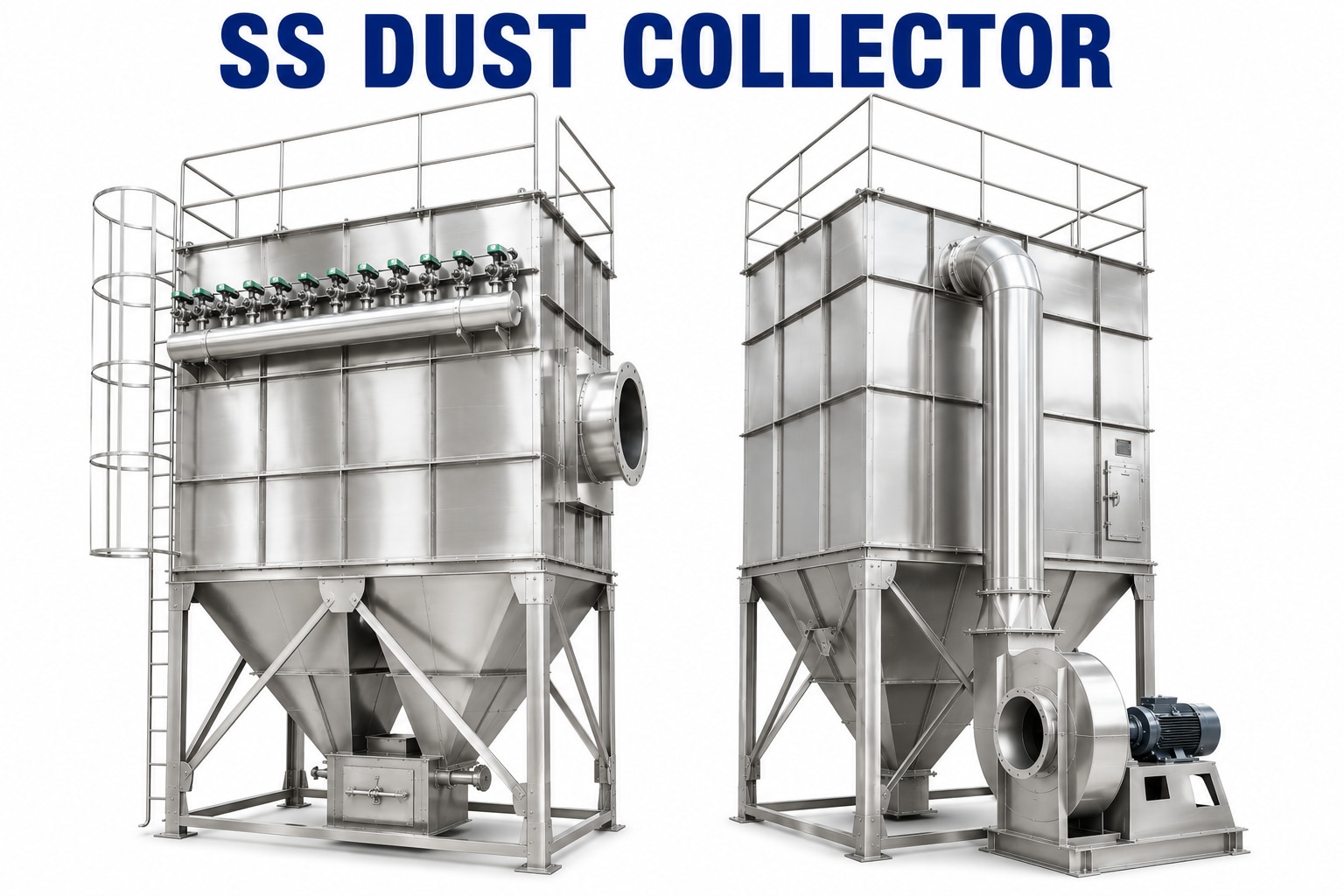 | Pollution Control System Sri Krishna Fibre Industries, Bangalore, manufactures premium-quality SS Dust Collectors designed to efficiently remove dust, fumes, smoke, and... View product → |
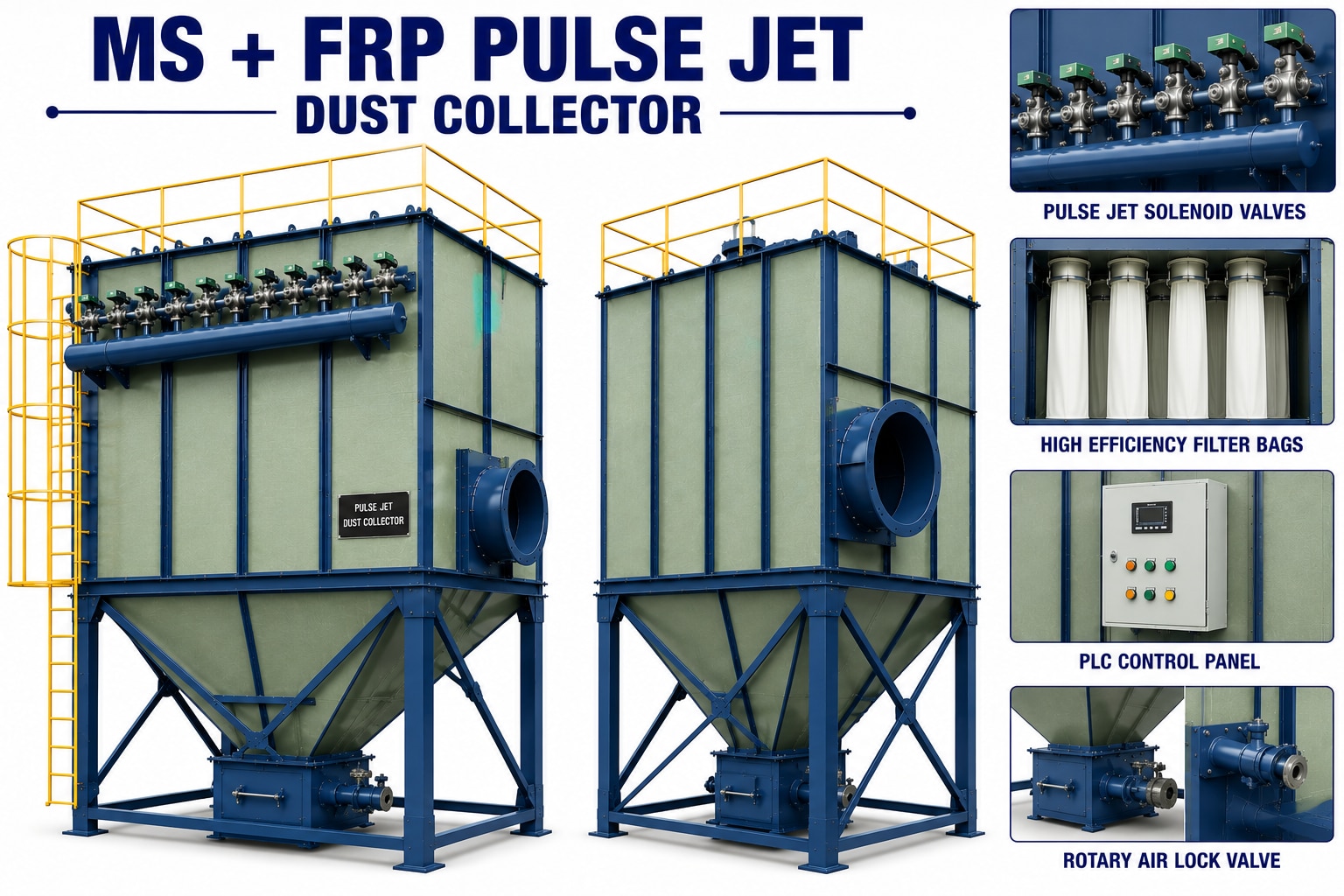 | Pollution Control System Sri Krishna Fibre Industries, Bangalore, manufactures advanced MS + FRP Pulse Jet Dust Collectors designed for effective air pollution control in... View product → |
Frequently asked questions
What information should you give a pollution control system manufacturer?
Provide the process description, emission source, gas flow rate, temperature, pressure, contaminant loading, particle size, moisture, corrosive chemicals, operating hours, and required outlet limits.
How do you match pollution control technology and materials to a process?
Choose the control method from the contaminant and operating conditions, then check corrosion, abrasion, temperature, moisture, and chemical compatibility before selecting construction materials.
What should you compare beyond the main pollution control equipment?
Compare the complete air-handling system, including hoods, ductwork, dampers, fans, filters, stack, controls, access points, pressure losses, energy use, and maintenance requirements.
How can you test a manufacturer's performance guarantees?
Put measurable outlet limits, airflow, pressure drop, test methods, sampling locations, operating conditions, acceptance criteria, and remedies for failure into the contract.
What documentation and support should a manufacturer provide?
Request approved drawings, calculations, material specifications, inspection records, operating manuals, spare-parts lists, commissioning reports, training, and a preventive-maintenance schedule.
Related products
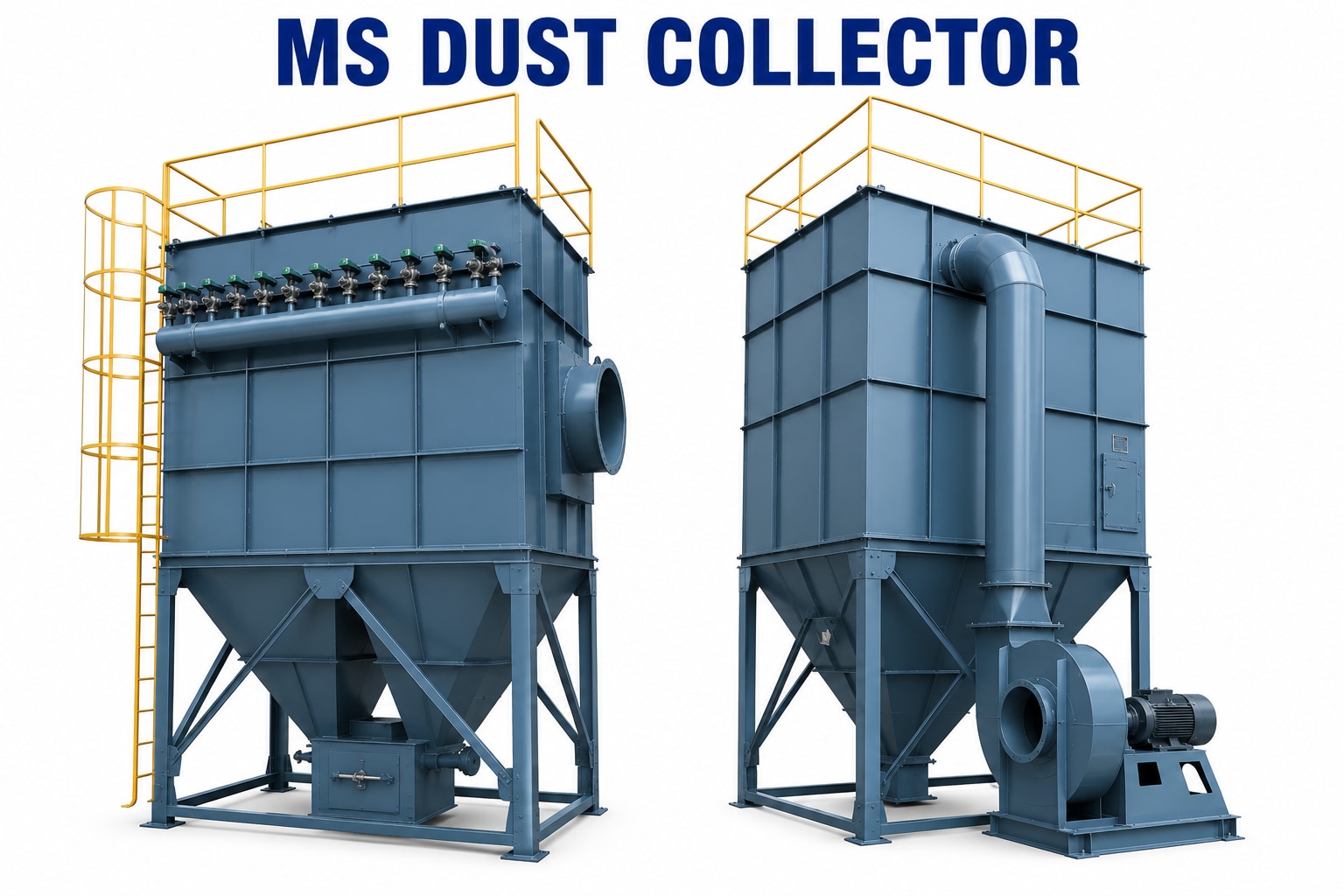 | Pollution Control System Sri Krishna Fibre Industries, Bangalore, manufactures high-performance MS Dust Collectors designed to effectively capture and remove dust, smoke,... View product → |
 | Pollution Control System Sri Krishna Fibre Industries, Bangalore, manufactures high-quality SS Scrubber Systems for industrial air pollution control, chemical fume... View product → |
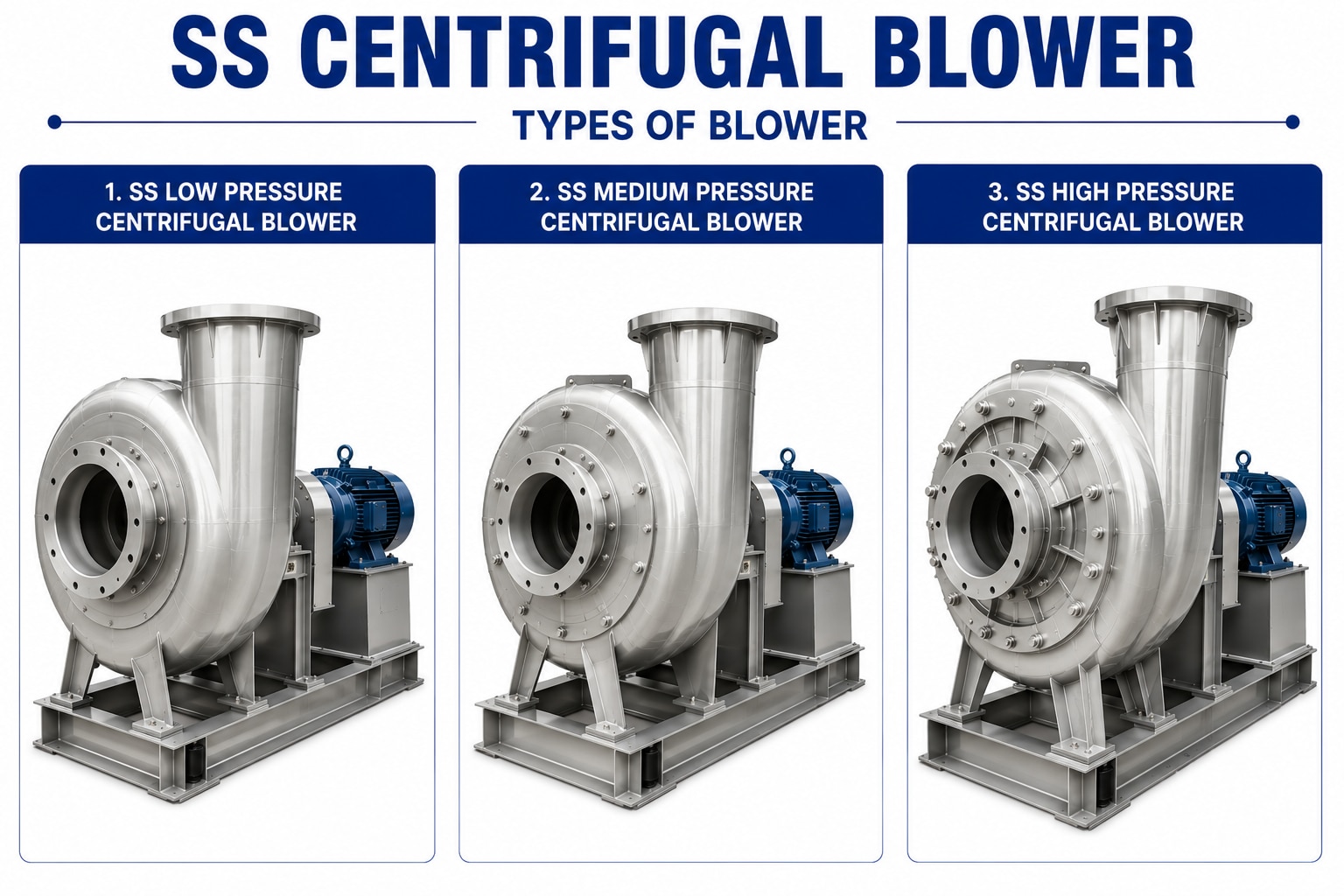 | Pollution Control System Sri Krishna Fibre Industries, Bangalore, manufactures premium-quality SS Centrifugal Blowers in Low Pressure, Medium Pressure, and High Pressure... View product → |
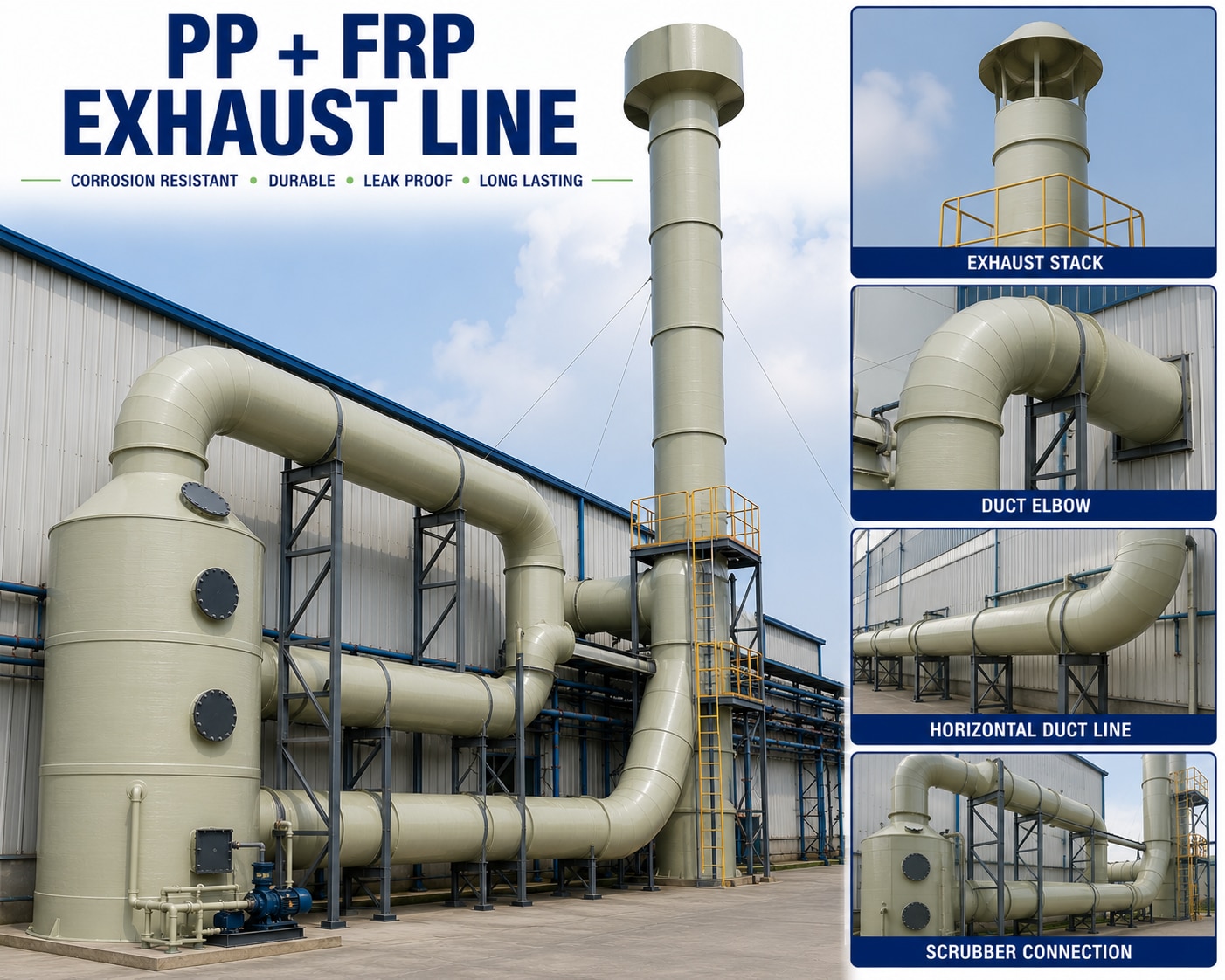 | Plating Line Sri Krishna Fibre Industries, Bangalore, manufactures and installs high-performance PP + FRP Exhaust Line Systems designed for efficient extraction,... View product → |